

Sustainability as part of the fabric of Hashel’s artistic practice

Hashel Al Lamki’s sustainability practice sits across the following key environmental and social pillars:

Climate Change​

Goal: To measure, reduce and report the carbon footprint of his studio and artistic practice, following GCC Active Member Policy.

Circular Economy

Goal: To follow the principles of circularity (reduce, reuse, recycle, and recover) as a fundamental aspect of his creative process.

Social Impact

Goal: To address narratives that raise awareness of our current planetary and social crisis, positively impact and engage with the community, and influence systemic change in the arts and culture ecosystem.

Hashel’s art explores the intricate relationship between humankind and nature, highlighting how excessive human consumption has led to environmental degradation and resource depletion. By incorporating ancient, cross-cultural techniques and using materials sourced from natural resources, his practice weaves together themes of tradition, sustainability, and the natural world. His work underscores the urgency of adopting new paradigms to protect the environment and preserve the delicate balance of our ecosystem.

Beyond the narrative of his art, Hashel is committed to fostering a sustainable studio practice that aligns with the global sustainability agenda. He actively responds to pressing environmental challenges through comprehensive sustainability actions and reporting, aiming to encourage the arts and culture sector—as well as his audience—to adopt more sustainable practices.

Since 2023, Hashel has integrated environmental sustainability into his studio policy by measuring, reducing, and reporting the carbon emissions of his artistic practice and related activities, including participation in exhibitions, biennales, and other programs. He also embraces the principles of circularity in his work, using non-toxic materials—such as natural pigments sourced across the MENA region—and incorporating upcycling as a core element of his creative process.

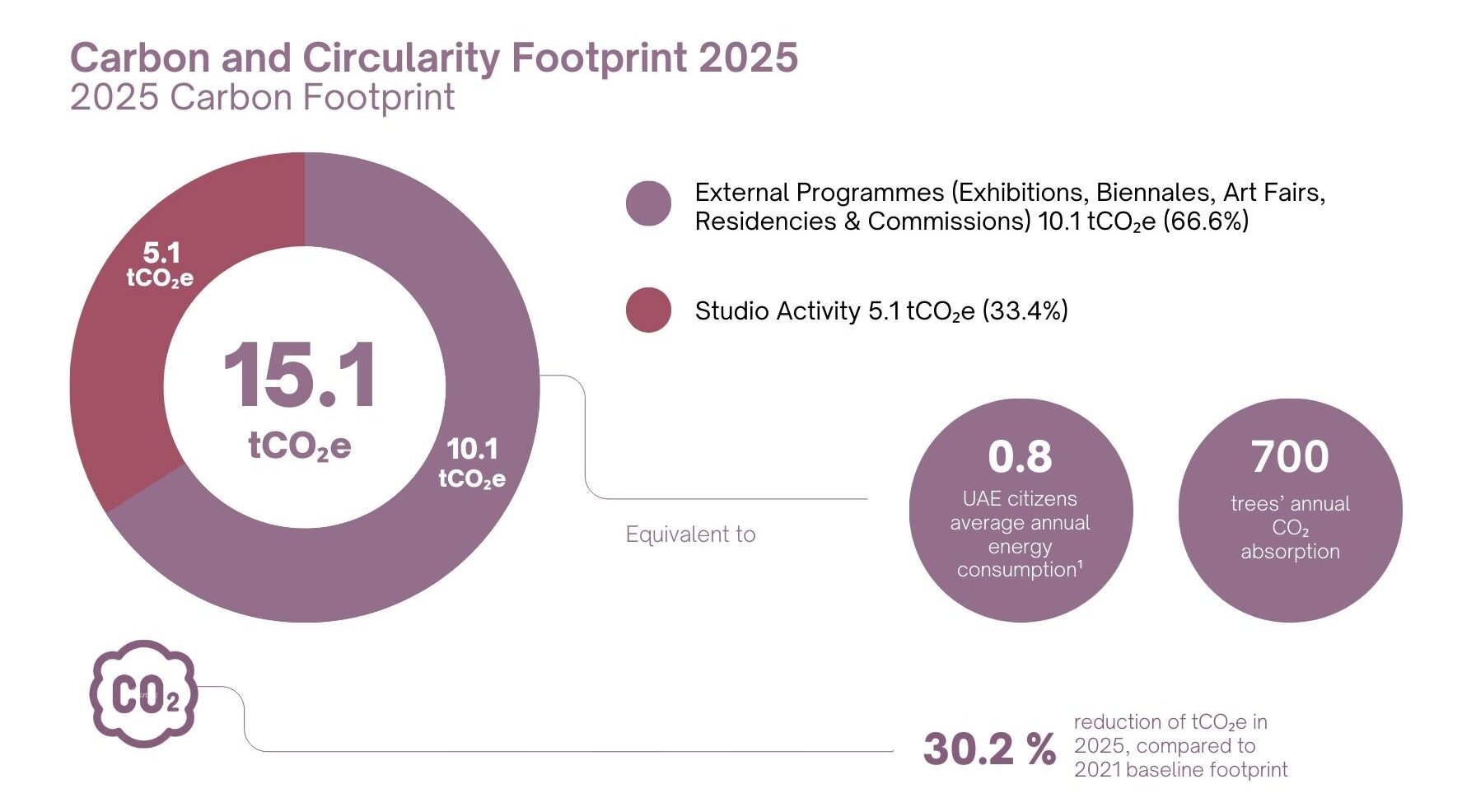
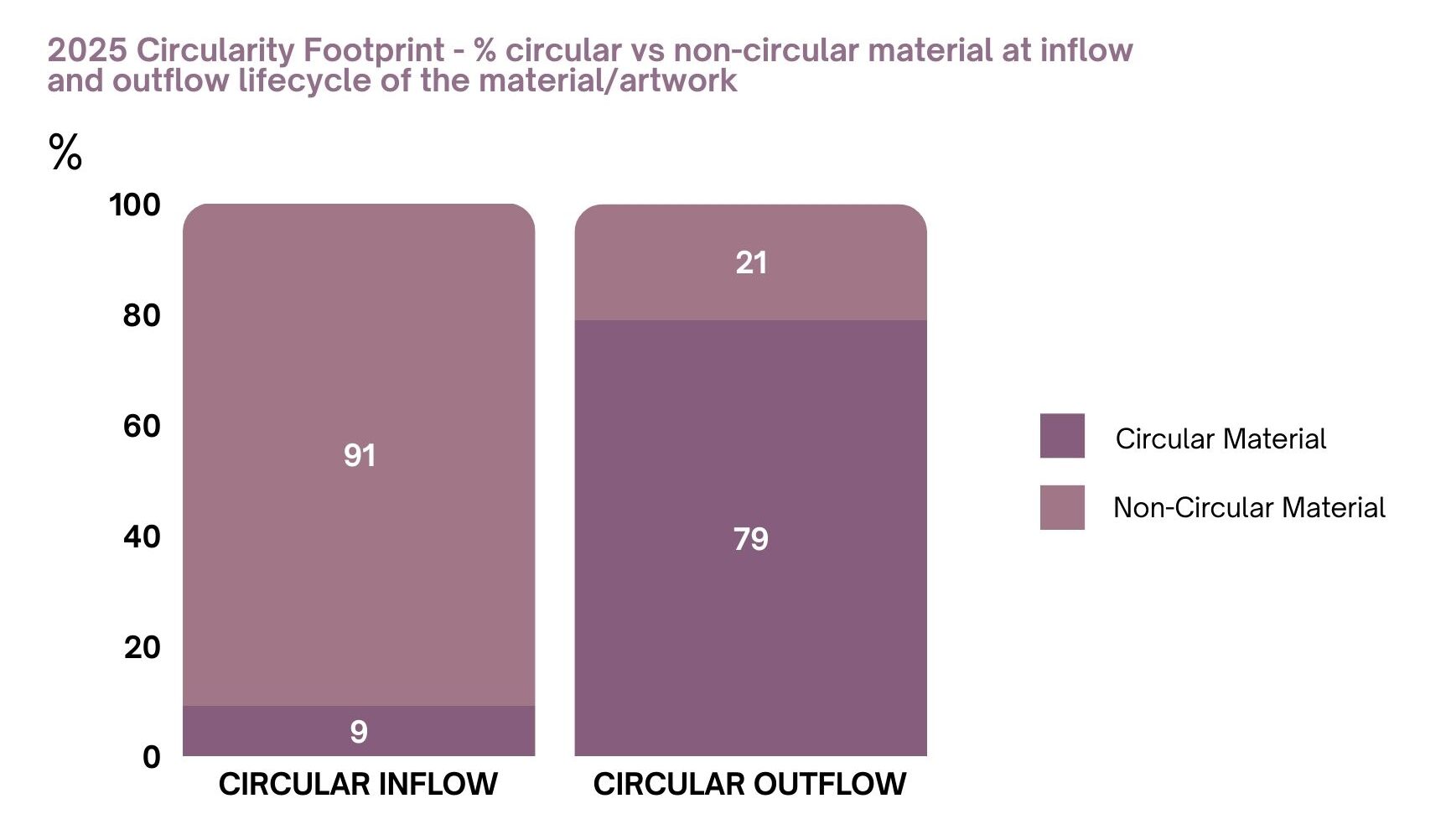
Hashel has achieved an Active Member certification and badge in 2023 and 2024 from the Gallery Climate Coalition (GCC), an organisation pioneering the effort to create an environmentally responsible art world. GCC’s primary goal is to facilitate a reduction of the sector’s CO2e emissions by a minimum of 50% by 2030, as well as promoting zero waste. As an Active Member of Gallery Climate Coalition, Hashel submits his carbon footprint and green actions annually to GCC. See his 2025 Sustainability Report and his 2021 Carbon Report. In 2025, Hashel’s carbon footprint totaled 15.1 tCO2e, reflecting a 1.9% reduction from 2024, despite an expanded international programme. Since 2024, he has measured the circularity of his artwork production and packaging materials.

“In my art, I explore themes of history, geology, and the deep connection between nature and humanity. My personal sustainability journey began at home, shaped by my parents’ resource-conscious mindset in the 80s and 90s. Today, I am focused on understanding my carbon footprint and measuring the sustainability impact of my work. My hope is to raise awareness of the environmental and social challenges we face and inspire action— hopefully encouraging more artists and cultural stakeholders to join the conversation.”

Hashel Al Lamki, 2025
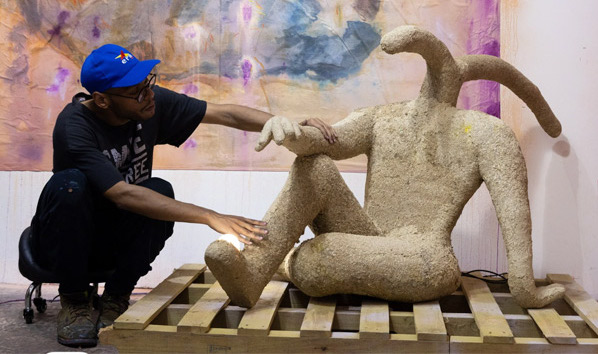
Hashel Al Lamki creates sculptures from circular materials, utilising leftover sawdust from making wooden frames.
Hashel with Big Man (2018-2023). The material used to create this sculpture is the leftover sawdust from the carpenter's process when making wooden frames.

2025 Carbon and Circularity Footprint

Sustainability Commitment

Hashel is committed to integrating sustainability into his studio activities and artistic practice, aligning with the global sustainability agenda through the following principles:

Carbon Emissions & Climate Change

  • Measure and set targets to reduce the carbon footprint of his artistic practice and studio, in line with the requirements of his Active Membership in the Gallery Climate Coalition (GCC).
  • Report and share his carbon footprint to encourage individual accountability and raise awareness of our impact on the planet.
  • Minimise the international transportation of materials for artworks, prioritising sea freight when necessary.
  • Adopt an environmentally conscious approach to travel and accommodation.

Circularity and waste

  • Maintain an artistic practice rooted in circularity and waste reduction.


  • Avoid the use of virgin raw materials when recycled or reused alternatives are available, incorporating upcycled waste and discarded objects into artworks and exhibition design.


  • Study the lifecycle of materials to support responsible decision-making within a comprehensive circular approach.

Systemic impact

  • Develop and share the studio’s sustainability guidelines to engage institutions, curators, and supply chain providers in supporting this commitment..

Art as an agent for change

  • Use his artwork to foster narratives that raise awareness of today’s environmental and social challenges.
  • Lead by example by embedding sustainability principles and transparent reporting into his artistic practice.
  • Support community-wide progress towards sustainability by sharing expertise, participating in policy dialogue where appropriate, and maintaining awareness of emerging frameworks, policies, and best practices.
  • Engage responsibly with the places and communities he encounters, listening to local concerns, respecting cultural and ethical contexts, and allowing these experiences to inform and enrich his artistic practice.

Donations through Strategic Climate Funds (SCFs)

  • In recognition of his annual carbon footprint, Hashel follows GCC guidance on SCFs. These contributions are not carbon offsets but a responsibility-driven initiative to support impactful environmental restoration and regeneration projects.
 
  • In accordance with the SCF Policy, Hashel will allocate funds equivalent to his annual carbon footprint for insetting actions—initiatives that enable further reductions in his future carbon footprint by reserving resources for sustainability-driven improvements.

27 February 2026