

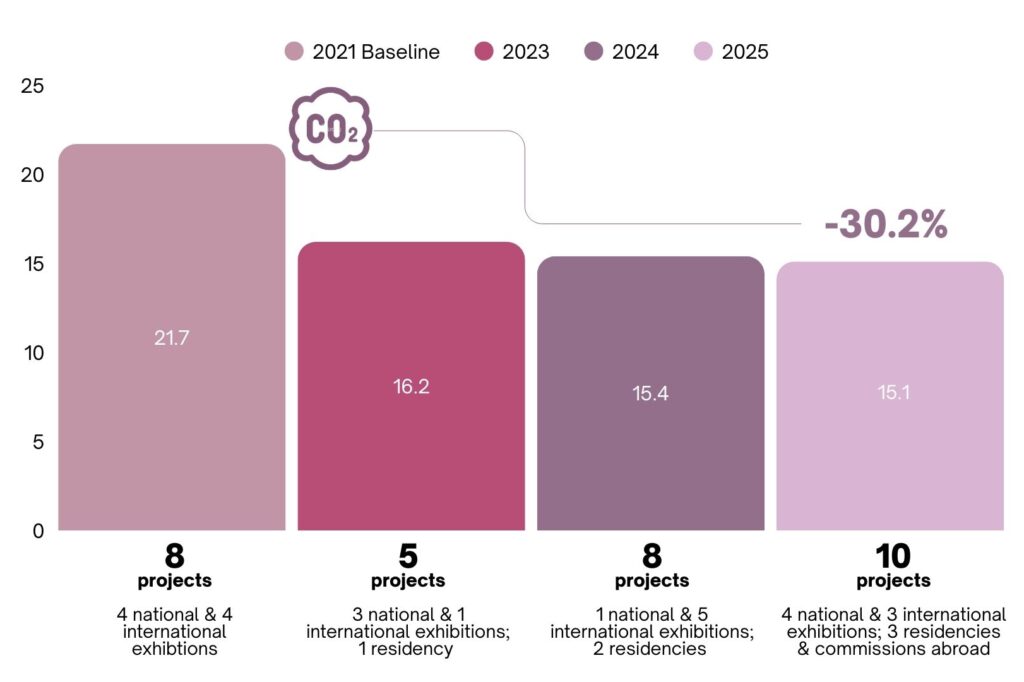
Understanding and reducing carbon emissions is an integral part of Hashel’s studio methodology. Since establishing his 2021 baseline, he has treated carbon measurement not only as a reporting tool, but as a framework for decision-making—informing how works are produced, transported, and exhibited. In 2025, despite an expanded international programme, his carbon footprint reflects a continued reduction, demonstrating that artistic mobility and environmental responsibility can evolve in parallel.
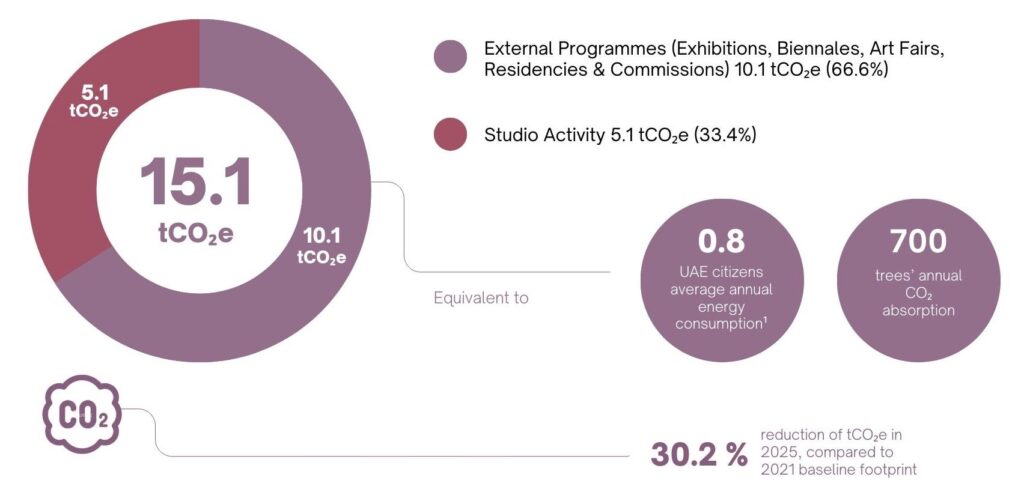
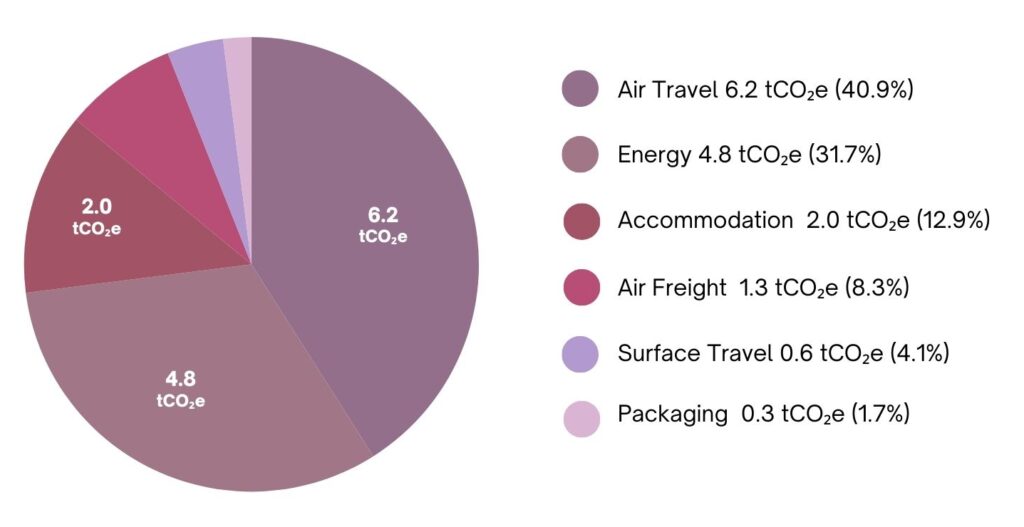
Hashel’s 2025 carbon footprint achieved a 30.2% reduction in tCO₂e compared to his baseline in 2021, and 1.85% compared to 2024, despite his increased participation in exhibitions, biennales, and programs.
Hashel is committed to understanding the lifecycle of materials and emissions within his practice. The ongoing development of measurement tools enable better informed decisions with consideration beyond his immediate use toward longer-term ecosystem impact.
Hashel’s artwork is inherently connected to circularity. His studio is located in an industrial area, where discarded materials are abundant. Hashel works with what surrounds him, usually objects with a past life: repurpose textiles, scrap metal, bedsheets, pillowcases or napkins and other discarded materials, which he transforms into resources for new works.
He approaches these materials as part of an ongoing lifecycle, carefully considering their movement, exhibition potential, and continued use over time. His series evolve organically through dialogue with communities and landscapes, allowing each project to build upon the last rather than exist as an isolated production.
«I designed the journey of my artworks similarly to my own—connecting periods of creation with exhibition. Works produced during residencies travelled onward where appropriate, forming a continuous thread rather than separate, resource-intensive projects. Instead of treating each commission as isolated, I interwove experiences.»
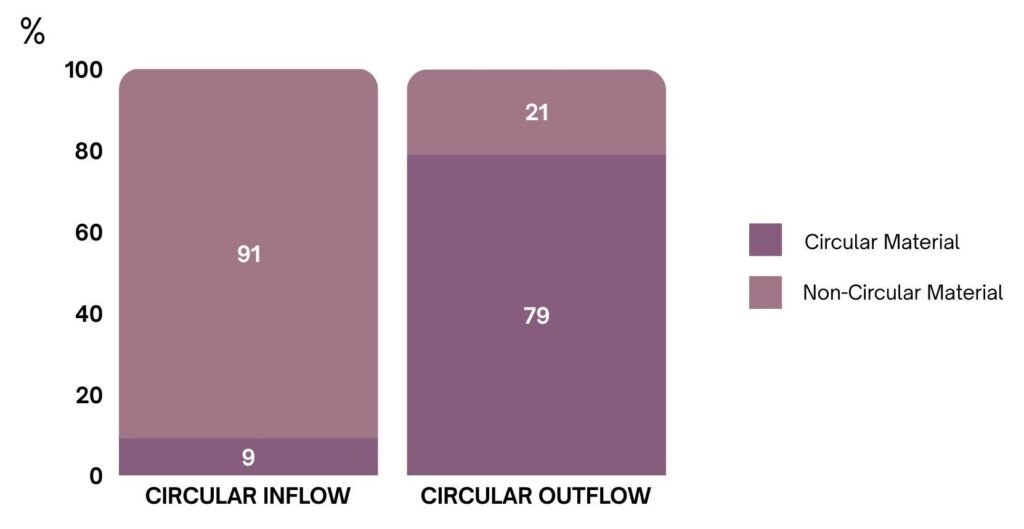
In 2024 and 2025 Hashel added the measurement of his circularity impact into sustainability reporting. The scope of the materials and artworks measured can be found in Table 2: Circularity Scope and Data.
Alongside his studio practice, Hashel contributes to wider sustainability efforts within the cultural sector through public programmes, mentorship, and advisory work. He has collaborated with the UAE Ministry of Culture on research informing a national sustainability framework for the arts and participated in Abu Dhabi Sustainability Week as a contributor and jury member. Through these engagements, he shares knowledge with emerging artists, supports sector dialogue, and advocates for environmentally responsible approaches across the arts ecosystem while remaining responsive to evolving policies and best practices in the UAE and beyond.
As a result, Hashel has further strengthened his sustainability journey by incorporating a new commitment: Support community-wide progress toward sustainability by sharing expertise, participating in policy dialogue where appropriate, and maintaining awareness of emerging frameworks, policies, and best practices.
«Measuring and reporting the carbon footprint of my practice has helped shape how I approach sustainability as an artist. What began as a personal commitment—often requiring explanation and advocacy—has gradually evolved into a shared understanding with collaborators as awareness in the cultural sector has grown. Today, supported by experience and the trust of institutions I work with, my focus has shifted from convincing others to expanding and strengthening the reach of this sustainability approach.»
Hashel Al Lamki, March 2026
Hashel is committed to supporting the Gallery Climate Coalition’s Strategic Climate Funds policy in recognition of his carbon impact. He will allocate resources to “insetting” initiatives in 2026. Insetting involves investing in strategies, actions, or materials that accelerate decarbonization—such as transitioning to renewable energy or collaborating with sustainability professionals.
1. Activity and operations of studio and artistic practice
Included in the carbon scope:
Not included in the carbon scope:
2. Participation in exhibitions, biennales, art fairs and residencies
2025 list of programmes (10 total: 3 international exhibitions & 4 national exhibitions, 2 residencies & 1 commission):
Included for each of these programmes:
Not included in the carbon scope:
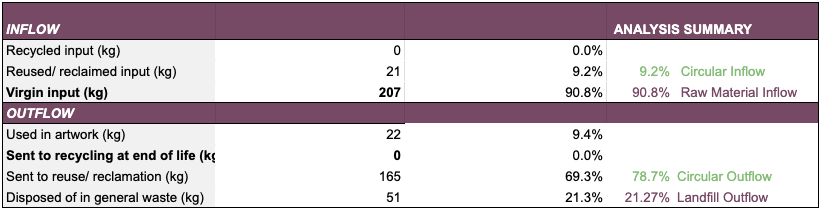
Included in the Circularity scope:
This assessment considers the materials used for artwork production as well as packaging for the projects:
¹ In 2024, UAE CO₂e emissions per capita was equivalent to 20.13 tCO₂e, according to Our World in Data
² 15.1 tCO₂e is comparable to the annual carbon absorption of approximately 600–760 trees growing for one year. Estimates from the U.S. EPA and forestry research suggest that a mature tree absorbs roughly 10–40 kg CO₂ per year, with ~20–25 kg commonly used as an average benchmark for communication purposes. US EPA
This sustainability report has been developed by culture-led sustainability agency UreCulture SL, who support culture actors to step into leadership roles in regenerative sustainability thanks to the support of Tabari Art Space.
hello@hashelallamki.com
@ 2024 Hashel Al Lamki | All rights reserved | Website developed by UreCulture | Cookie Policy