
2024 Sustainability Report

Carbon Footprint

15.4

tCO₂e

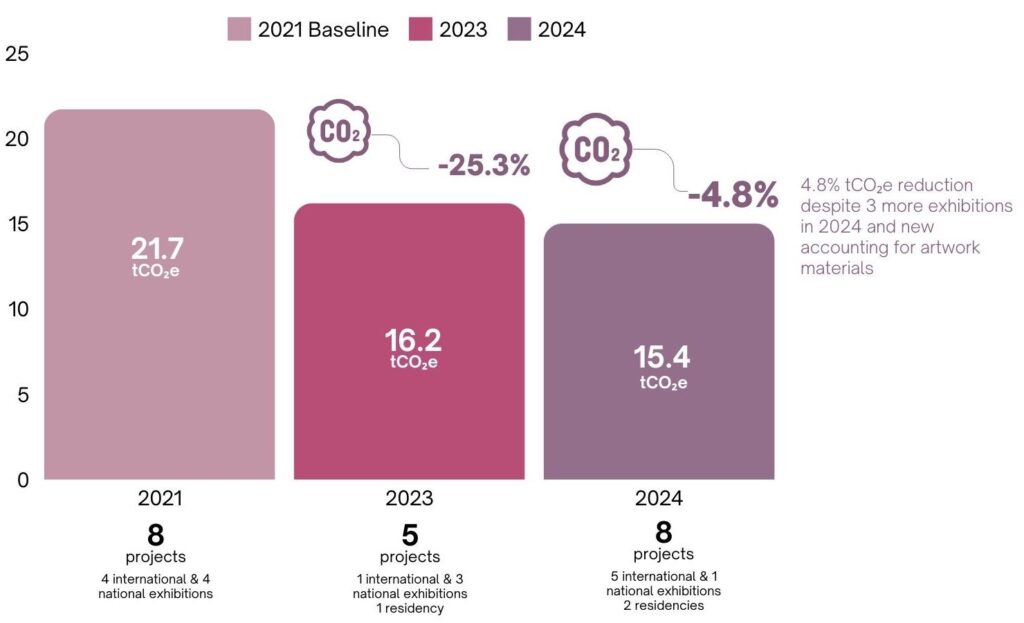
4.8% reduction from the 2023 carbon footprint, 28.9% reduction from the 2021 baseline carbon footprint.

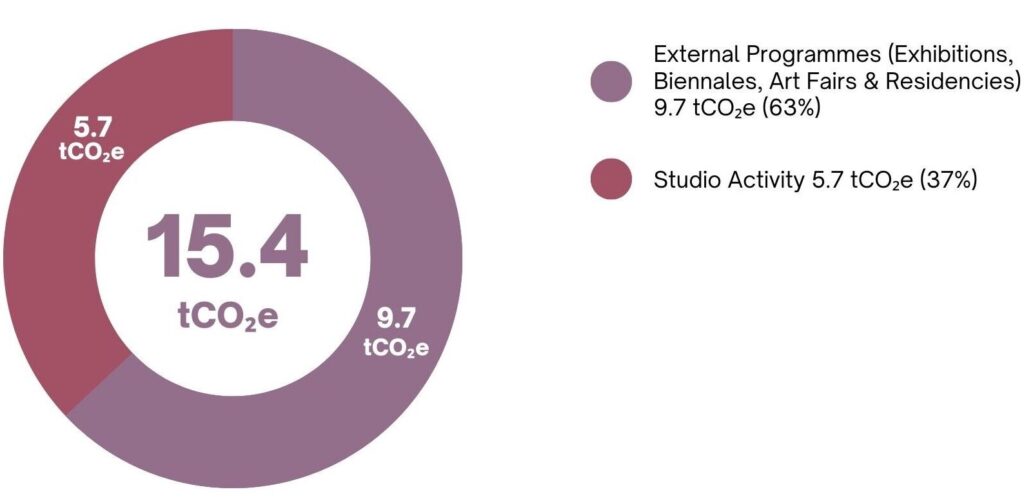
2024 Total Carbon Footprint 15.4 tCO₂e

Divided Studio vs External Programmes​

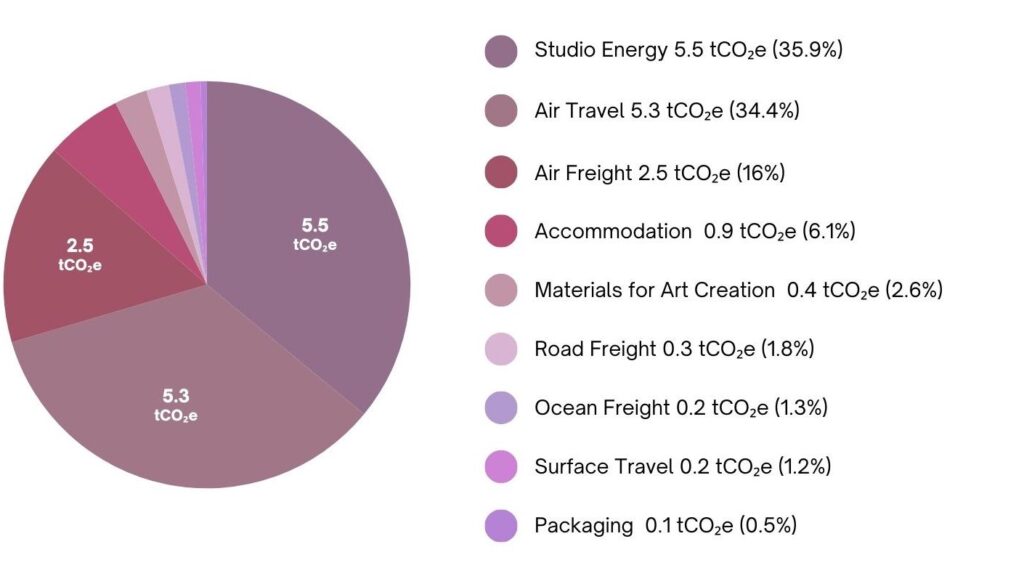
2024 Total Carbon Footprint 15.4 tCO₂e

Divided per Gallery Climate Coalition Categories

Carbon Footprint Reduction 2021, 2023 and 2024

Hashel’s 2024 carbon footprint achieved a 4.9% reduction in tCO2e compared to 2023,  despite his increased participation in exhibitions, biennales, and programs, and increasing the scope of the carbon footprint to include artwork materials. 
Actions Taken to Reduce Carbon Footprint

  • Hashel opted for sea freight to transport his works Maqam and Bronze for the exhibition Notes From Another Shore in India and the light festival Noor Riyadh in Saudi Arabia. Ocean transport emits approximately 60 times less carbon than air transport. For example, shipping the 1,393 kg artwork Maqam by sea resulted in emissions of just 0.13 tCO2e, compared to 8.5 tCO2e by air. Similarly, the shipment for Noor Riyadh emitted only 0.03 tCO2e by sea versus 2.55 tCO2e by air, preventing nearly 11 tCO2e from being released into the atmosphere.
  • In some exhibitions, such as Bamako Encounters of Photography, Hashel eliminated shipping emissions by dismantling the artwork on-site and repurposing its materials for a second life.
  • The artwork exhibited at Noor Riyadh was an installation showcased at a previous exhibition in the UAE. Rather than commissioning a new production, the existing installation was shipped via sea and road freight to Saudi Arabia, maximizing existing resources and reducing the need for virgin materials.
  • Hashel’s circular approach to materials further minimizes his carbon footprint. He repurposes objects, prioritizes biodegradable materials where possible, and carefully considers their origins. See the Circularity section below for a detailed analysis.

Digital Carbon Footprint

Hashel has made an effort to optimize his website to achieve a lower carbon impact by limiting the amount and size of media.

www.hashelallamki.com has achieved a carbon rating of C, and is currently cleaner than 59% of all web pages globally, according to Website Carbon Calculator.

Circularity Footprint & Practice

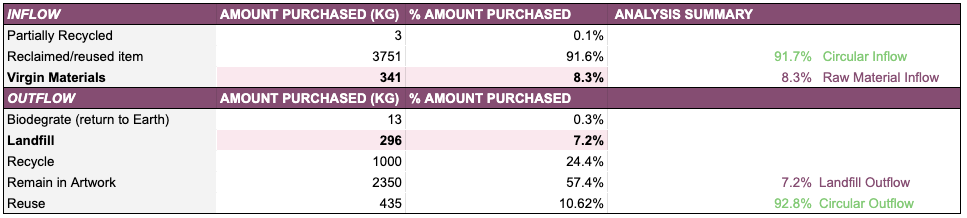
Hashel’s artwork is inherently connected to circularity. His studio is located in an industrial area, where discarded materials are abundant. His creative process is inspired by scrap metal, repurposed bedsheets, pillowcases or napkins and other discarded materials, which he transforms into valuable resources for new works. In 2024 Hashel added the measurement of his circularity impact into sustainability reporting. The scope of the materials and artworks measured can be found in Table 2: Circularity Scope and Data.
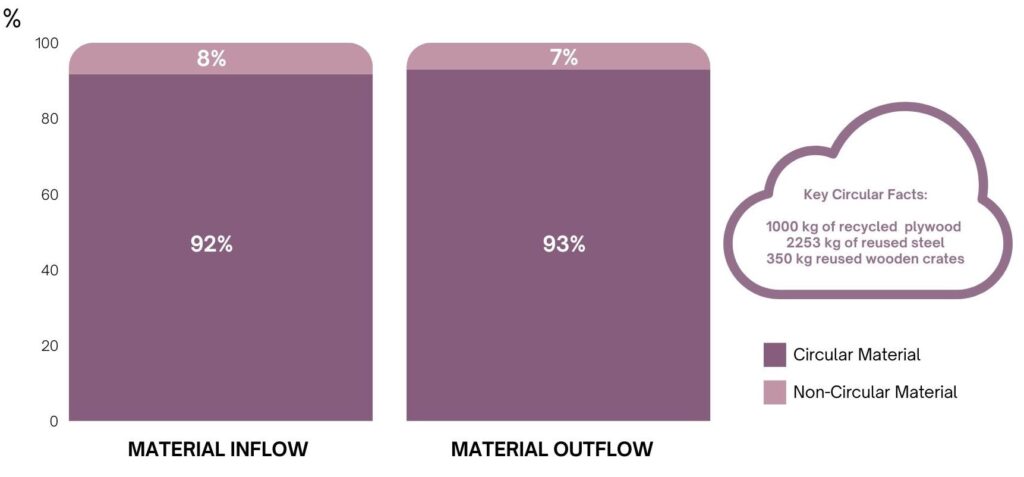
2024 Circularity Footprint - % circular vs non-circular material at inflow and outflow lifecycle of the material/artwork

Summary of Circularity Practice for 2024

  • For the festival Noor Riyadh, Hashel and the organizers shipped an existing installation from the UAE to Saudi Arabia instead of producing a new edition, reducing the need for new materials.
  • For Bamako Encounters of Photography, his artwork was printed on biodegradable envelopes containing baobab seeds, which were later distributed to local schools for planting. The wooden frame supporting the artwork was donated to a school for repurposing, eliminating transportation emissions.
  • Many of the artworks created during his residency at La Residencia in Mallorca—later exhibited at Sharjah Biennial 16—were painted on repurposed bedsheets, pillowcases, napkins, and fabrics.
  • For the exhibition Notes From Another Shore, Hashel embraced the venue’s striking interior architecture by displaying his sculptural artwork directly on the floor, eliminating the need for plinths.
  • At La Residencia, Hashel donated 80% of his artwork materials to the next resident artist, preventing unnecessary transportation and waste.
  • At the End of the Knight II was conceived and produced locally for Public Art Abu Dhabi Biennial, eliminating the need for transportation. Created from 1000 kg of recycled marine plywood and aluminum sheets and printed using a UV technique, the process minimized harmful volatile organic compound (VOC) emissions.

Social & Systemic Impact

Narratives for Social Mindshifts – A 2024 highlight of an artwork where Hashel weaves themes of sustainability in the narrative is Part Time Lovers, created for Sharjah Biennial 16.

“Part Time Lovers invites viewers to interpret his “thrown shells” not as mere artistic flourishes but as symbolic cues that engage audiences in deciphering the interplay between humanity and nature. The nine-meter polyptych, commissioned for the 16th Sharjah Biennial and exhibited at the Sharjah Art Museum, operates as a surreal landscape layered with complex narratives about environmental fragility, interconnectedness, and personal accountability. This work imagines a landscape shaped by phenomena such as altered rain patterns and tectonic shifts, offering a visual language that reflects the intimate and global consequences of climate change.” Curatorial Team, Sharjah Biennial, 2025.

Systemic Impact – When planning an exhibition, Hashel invites his partners to unite efforts by proposing new approaches to reduce emissions or improve circularity.

  • In 2024 Hashel influenced the exhibition’s organiser to choose sea transportation for the exhibition Notes From Another Shore, in India, and the light festival Noor Riyadh, in Saudi Arabia.
  • For the Public Art Abu Dhabi Biennial, Hashel requested that his artwork At the End of the Knight II be produced locally therefore, avoiding international transportation.

Strategic Climate Funds: Investing in the Planet

Hashel is committed to supporting the Gallery Climate Coalition’s Strategic Climate Funds policy in recognition of his carbon impact. His 2023 carbon footprint of 16.2 tCO₂e corresponds to an SCF contribution of USD 1,037 (USD 64 per tonne of CO₂e), which he will allocate to “insetting” initiatives in 2025. Insetting involves investing in strategies, actions, or materials that accelerate decarbonization—such as transitioning to renewable energy or collaborating with sustainability professionals.

TABLE 1: Hashel Al Lamki Carbon Footprint SCOPE 2024

1. Activity and operations of studio and artistic practice 

 Included in the carbon scope:

  • Studio annual energy consumption (data for the kWh grid energy consumption was based on an assumption due to lack of accurate data from landlord)
  • Air and car travel
  • Hotel accommodation for activities not related to the external programmes below
  • Logistics related to artwork sales (transportation & packing)

Not included in the carbon scope:

  • Publications & printing (as none were carried out)
  • Air Travel
  • Hotel accommodation for activities not related to the external programs below

2. Participation in exhibitions, biennales, art fairs and residencies

2024 list of programmes (8 total: 5 international exhibition & 1 national exhibitions, 2 residencies):

  • Exhibitions (Public Art Abu Dhabi Biennial, Gwangju Biennale, Bamako Encounters of Photography, Maqam, Undo Planet, Noor Riyadh Festival, and the production for Sharjah Biennial 16)
  • La Residencia Art Residency
  • ARD Art Foundation Residency Cairo

Included for each of these programmes:

  • Air and car travel
  • Hotel / residential accommodation
  • Artwork transportation
  • Materials for artwork production and packaging

Not included in the carbon scope:

  • Energy consumption of the exhibition and other event venues due to all projects being group shows; and the lack of control on the carbon impact of the hosting exhibition venue.
  • Publications & printing, as none were carried out exclusively for Hashel.

TABLE 2: 2024 CIRCULARITY SCOPE AND DATA​

 Included in the Circularity scope:

  • This assessment considers the materials used for artwork production as well as packaging for the projects:
  • Artwork produced in Mallorca La Residencia and packaging for transportation
  • Artwork produced in the residency in Cairo
  • Packaging for the artwork Maqam
  • Artwork produced for Noor Riyadh and packaging for transportation
  • Artwork produced for Abu Dhabi Public Art Biennial
  • Artwork produced for Undo Planet and packaging for transportation
  • Artwork produced for Sharjah Biennial (artworks that were produced in 2024)
  • Artwork produced for Bamako Encounters of Photography and packaging for transportation
  • Packaging used for Gwangju Biennial artwork transportation
  • Packaging used for artwork sales transportation

This sustainability report has been developed by culture-led sustainability agency UreCulture SL, who support culture actors to step into leadership roles in regenerative sustainability thanks to the support of Tabari Art Space.